
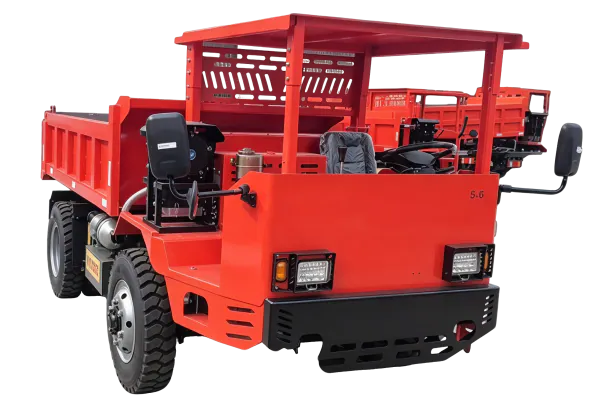
RWD and 4WD identify different drive configurations. The label alone does not establish a truck’s traction, grade performance, braking behavior or suitability for a particular route. Those questions require information for the exact vehicle and operating conditions.
Begin with the route and work pattern
Describe the surface, grades, route length, turning space, loading area and expected duty pattern. Include conditions that vary between loaded and empty travel. If the route has sections that are wet, loose, uneven or steep, call them out for review rather than treating the drive label as a performance guarantee.
Ask what each configuration means on the selected model
Request the manufacturer’s description of the drive system and a specification for the exact payload band. Check whether the configuration changes any related components, weights or available options. Do not copy values from another payload band or another cab-style model.
Compare evidence, not just labels
If a supplier provides gradeability, speed, braking or operating-condition figures, ask for the model, configuration and test conditions that support them. Confirm how the information relates to your route and the mine’s operating rules. A general statement about RWD or 4WD is not a substitute for those records.
Include support and operating considerations
Ask which maintenance information and replacement parts apply to each configuration, and whether the differences affect your maintenance plan. Keep these questions specific to the product under consideration; availability and support arrangements should be confirmed for the order and destination.
Questions to include in your inquiry
- Which RWD and 4WD versions are listed for the payload band I am considering?
- What are the exact technical differences in the current manufacturer specifications?
- Which performance data and test conditions are available for my route?
- Which dimensions, weights, braking details and maintenance items differ by configuration?
A buyer-side comparison checklist
Use the same checkpoints for both versions of the exact payload model. The table is a list of questions to verify, not a statement that every item differs between RWD and 4WD.
| Checkpoint | Question to ask | Information to compare |
|---|---|---|
| Drive system | How is the drive configuration defined on this model? | Manufacturer description for the exact payload band and version. |
| Vehicle data | Which dimensions, operating mass or component details apply? | Current specification records for each listed configuration. |
| Operating evidence | What performance information is available, and under what conditions was it established? | Model, configuration, test conditions and the route information being reviewed. |
| Maintenance | Do the configurations have different maintenance instructions or replacement parts? | Current parts and maintenance information for the selected versions. |
HUAYI’s current 3–16 t product pages present RWD and 4WD as configurations within each payload page. Confirm the current product specification and available options directly for the selected payload band.